Claude Training NZ, home
Screen-print illustration of the Marlborough Sounds’ drowned valleys and bush-clad ridgelines
Illustration generated with AI.

Te Tauihu-o-te-waka. Marlborough District

Claude training in Marlborough

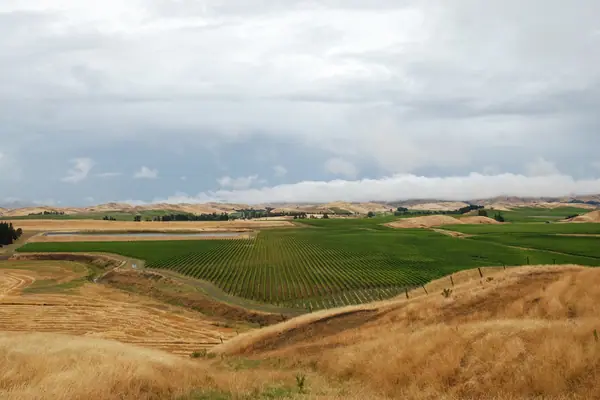
Marlborough vineyards, wine production and Sounds aquaculture connect land and marine work across the region; approved documents from those sectors can anchor a Claude reading exercise. A sustainability lead can add approved long reports and PDFs to a Claude Project and ask for a structured comparison of methods and stated limitations.1,2,6,4

Fewer of Marlborough’s workers are desk-based than across New Zealand.

56.0% in Marlborough, 63.6% across New Zealand: about 14,900 people.

Marlborough

New Zealand

Role typeMarlboroughNZ
Desk-based56.0%63.6%
People-facing9.0%9.0%
Hands-on35.0%27.4%
Desk-based: managers, professionals, clerical and sales workers, roles where AI assistance is most applicable. Broad proxy, not measured adoption or a forecast. Stats NZ, 2023 Census; ILO, 2025.
Residents
49,4002023 Census
Business locations
7,374Feb 2025, +3.0% since 2020
Employees (jobs here)
24,093at local businesses, Feb 2025
Towns with a page
31,000+ residents

What AI means for work in Marlborough

Marlborough ranks 14 of 16 regions for the share of desk-based roles. Findings from Stats NZ data, and what each means for Claude training.

How Marlborough works: desk-based, hands-on and people-facing roles

56.0% of employed residents in Marlborough work in desk-based roles, against 63.6% across New Zealand. The difference is mostly labourers: 15.1% of employed residents here, against 9.0% nationally. So a whole-of-staff rollout is the wrong shape here. Start with the people who carry the paperwork (office, admin, management and the professionals) and put Claude to work on the documents they already write: procedures, reports, applications and correspondence.

Employed residents by occupation group, Marlborough and New Zealand, 2023 Census
Occupation groupChartMarlboroughNZ
Managers 19.1% 18.3%
Professionals 19.9% 26.8%
Technicians and trades workers 13.4% 12.5%
Community and personal service workers 9.0% 9.0%
Clerical and administrative workers 9.8% 10.8%
Sales workers 7.2% 7.8%
Machinery operators and drivers 6.5% 5.9%
Labourers 15.1% 9.0%

Desk-based roles: managers, professionals, clerical and administrative workers, and sales workers (ANZSCO major groups). These are roles where AI assistance is most applicable. This broad proxy is not measured adoption or a forecast of job change. People-facing: community and personal service workers (care, hospitality service, sport, police and similar). Hands-on: technicians and trades, machinery operators and drivers, labourers.

Source: Stats NZ, 2023 Census, usually resident employed people; ILO, Generative AI and jobs: a refined global index of occupational exposure (2025).

Farming, forestry, fishing is 3.3 times as common in Marlborough as across New Zealand

24,105 paid jobs at business locations in Marlborough in February 2025. The largest employer is farming, forestry, fishing, with 16.1% of jobs (New Zealand: 4.8%).

Share of paid jobs by industry, Marlborough and New Zealand, February 2025
IndustryChartMarlboroughNZ×
Farming, forestry, fishing 16.1% 4.8% 3.3×
Manufacturing 15.6% 9.4% 1.6×
Retail 10.1% 9.3% 1.1×
Health and social care 9.5% 12.0% 0.8×
Hospitality 7.4% 7.2% 1.0×
Construction 7.0% 8.2% 0.9×
Education 6.1% 8.5% 0.7×
Transport and warehousing 5.0% 4.2% 1.2×

Share of paid employees at business locations in the area, by ANZSIC06 industry division. × is the local share divided by the national share.

Source: Stats NZ, Business Demography Statistics, February 2020 and 2025.

Marlborough added 213 business locations from 2020 to 2025, slower than New Zealand

Business locations went from 7,161 to 7,374 (+3.0%; New Zealand +9.6%). Employees went from 24,736 to 24,093 (−2.6%; New Zealand +5.0%). The biggest gain in jobs was in transport and warehousing (+223), the biggest fall in farming, forestry, fishing (−493).

Business locations
7,1617,374 in 2025, from 2020
+3.0% NZ +9.6%
Employees (jobs here)
24,73624,093 in 2025, from 2020
−2.6% NZ +5.0%
Change in employees by industry in Marlborough, February 2020 to February 2025
IndustryChart20202025Change
Transport and warehousing 9921,215+223
Health and social care 2,0702,277+207
Other services 679827+148
Farming, forestry, fishing 4,3653,872−493
Hospitality 2,0921,791−301
Manufacturing 3,8613,755−106

Geographic units (business locations) and paid employees, February of each year. Small counts are randomly rounded by Stats NZ, so small changes can be noise.

Source: Stats NZ, Business Demography Statistics, February 2020 and 2025.

Remote work in Marlborough is close to the national rate

Both on-site and remote sessions work. Most teams start with a half-day on-site.

16.7%

Mainly worked from home, census day 2023

New Zealand 17.7%

88.3%

Households with internet access

New Zealand 90.5%

Main means of travel to work on census day, and access to the internet in occupied private dwellings.

Source: Stats NZ, 2023 Census, usually resident employed people.

Towns and cities in Marlborough

Each has its own page and local brief. Largest first, by residents at the 2023 Census.

Towns in Marlborough
TownResidentsDesk-based Chart Business locationsSince 2020
Blenheim 28,800 54.6% 3,306 +10.5%
Picton 4,810 55.0% 576 +3.8%
Renwick 2,450 51.7% 252 +1.2%
New Zealand4,993,92363.6%654,435+9.6%

Claude for Marlborough’s largest industries

The regional profile identifies wine as a major primary-sector employer, while marine farms support a separate processing chain; those details give a Claude brief a local source trail. Marlborough's wine workforce and research network includes local vineyard training and the research organisations sharing the Marlborough Research Centre campus.1,2,6,4

Wine and viticulture

Check a fictional vineyard handover against an approved seasonal procedure and annotate unresolved points.1,6

Aquaculture and seafood

Read a permitted marine-farm protocol with a mock harvest log and identify claims needing a source.2,10

About Marlborough

Marlborough is a unitary-authority region whose economy is closely tied to its land and coastal waters. Wine and viticulture are the largest primary-sector employer in the 2024 Infometrics breakdown, while seafood, farming and forestry also have distinct growing and processing workforces. Marlborough District Council reports that Sounds aquaculture produces about 80% of New Zealand’s commercially farmed seafood, and its economic strategy puts technology, cross-sector collaboration and Māori economic development among its resilience priorities. A regional research campus at Budge Street and the Te Au Pūngao technology hub connect primary industries with science, training and startup activity.1,2,3,4,5

Claude ideas grounded in Marlborough

Wine and viticulture

  • Compare sustainability reports across vineyard sites

    A sustainability lead can add approved long reports and PDFs to a Claude Project and ask for a structured comparison of methods and stated limitations. The lead checks each finding in its original passage before using it in a grower or buyer discussion.4,6

    Why here: Marlborough's wine workforce and research network includes local vineyard training and the research organisations sharing the Marlborough Research Centre campus.

    • Claude.ai Projects
    • long documents and PDFs
  • Prototype a grape-to-cellar process explainer

    A wine team can use a Claude Artifact to sketch an interactive explanation of a reviewed production process for induction or visitor education. A viticulture or cellar specialist approves terminology and removes any step that is not suitable for public sharing.4

    Why here: The MRC campus includes a teaching winery and Marlborough's local wine research partners, providing a specific setting for a reviewed production explainer.

    • Artifacts
  • Test a synthetic seasonal-staff data checker

    A developer can use Claude Code to prototype checks for missing or inconsistent fields in synthetic vineyard staffing records. The team tests the code on known examples and gets privacy and security review before connecting it to any real workforce data.6

    Why here: NMIT's Marlborough-facing vineyard training work specifically includes seasonal worker induction and workforce development.

    • Claude Code for developers

Aquaculture and the blue economy

  • Compare approved consent and monitoring documents

    A marine project team can use a Claude Project to compare approved consent documents and environmental-monitoring reports, highlighting differing terms for expert review. Staff verify every summary against the source and keep consent interpretation with qualified advisers.2

    Why here: Council describes both the economic role of Sounds aquaculture and the collaboration used to monitor its environmental effects.

    • Claude.ai Projects
    • long documents and PDFs
  • Map a seafood journey as an interactive draft

    A service designer can use Claude Artifacts to draw a draft workflow from farm collection to port-side warehousing for discussion with operators. Staff correct the sequence and remove commercially sensitive details before sharing the prototype.11

    Why here: Port Marlborough's new Westshore Warehouse is designed to support Marlborough seafood and aquaculture logistics at Waitohi Picton.

    • Artifacts
  • Write a checker for synthetic harvest manifests

    A developer can use Claude Code to prototype a validator for synthetic seafood shipment records, checking required fields and date formats. The operations team tests edge cases and reviews any integration for privacy and security before handling real records.11

    Why here: The Westshore Warehouse announcement describes new logistics activity for seafood businesses and names aquaculture and fishing operators that the facility serves.

    • Claude Code for developers

Local context

  • Marlborough Sounds. The Sounds host the region's marine farms and aquaculture operations, which connect producers with seafood, logistics and environmental-monitoring work.2
  • Marlborough Research Centre, Budge Street. The Blenheim campus includes offices, laboratories, a teaching winery and a lecture theatre and is shared by several wine and research organisations.4
  • Te Au Pūngao Tech & Innovation Hub. The hub provides Marlborough with coworking, meeting rooms, a makerspace and events for founders and technology businesses.5
  • Infometrics' 2024 chart separates primary-industry jobs into growing and processing, with wine the largest grouping shown.1
  • NMIT says it works with wine businesses on practical vineyard workforce training, including seasonal staff induction and supervisor development.6
  • Council's economic strategy identifies technology, innovation and cross-industry collaboration as tools for economic resilience and agritech development.3
  • Port Marlborough's 2026 annual report describes a new Westshore Warehouse supporting aquaculture, seafood and marine-services activity at Waitohi Picton.23
  • Marlborough District Council treats the destination organisation's work as regional stewardship as well as promotion, including wine tourism, cruise and cycle tourism.22

Training venues in and near Marlborough

Most training happens at your own workplace. For a public workshop day or an off-site session, these places hire out rooms.

  • Marlborough Chamber Wairau Training Room17

    25 people, largest layout

    Training room; the Chamber lists a maximum capacity of 25 and bookings for workshops and training events.

    • Free Wi-Fi
    • Presentation and multimedia equipment
    • Coffee and tea facilities

    Level 1, 6-8 Scott Street, Blenheim

  • Te Au Pūngao Tech & Innovation Hub5

    Coworking space

    Coworking desks and bookable meeting rooms; capacity not stated on the page reviewed.

    Level 1, 33 Arthur Street, Blenheim

  • Marlborough Events Centre24

    Conference venue

    Council lists capacity for 400 guests; the venue's own floorplan lists a per-hall classroom layout for 50.

    42a Alfred Street, Blenheim

From the venues’ own public listings. No booking or relationship is implied.

For Claude, a Marlborough exercise can pair approved seasonal instructions with synthetic vineyard or marine-farm records. A sustainability lead can add approved long reports and PDFs to a Claude Project and ask for a structured comparison of methods and stated limitations. The lead checks each finding in its original passage before using it in a grower or buyer discussion.1,2,6,10,4

Public Claude workshops in Marlborough

Nothing is scheduled in Marlborough yet. We plan public Claude days where enough people ask for one, so register below and we will email you when one is set. Private team sessions can be booked any time.

Register interest in a public workshop in Marlborough

Tell me when there is a workshop in Marlborough

We will email you when a public workshop is scheduled nearby. No other mailing.

We use these details only to reply to you, and store them securely with TheColab. Privacy

Other regions

Claude training in Marlborough: questions

How could a Marlborough team use Claude to compare sustainability reports across vineyard sites?

A sustainability lead can add approved long reports and PDFs to a Claude Project and ask for a structured comparison of methods and stated limitations. The lead checks each finding in its original passage before using it in a grower or buyer discussion.6,4

How could a Marlborough team use Claude to prototype a grape-to-cellar process explainer?

A wine team can use a Claude Artifact to sketch an interactive explanation of a reviewed production process for induction or visitor education. A viticulture or cellar specialist approves terminology and removes any step that is not suitable for public sharing.4

Which area does this Marlborough page describe?

Claude exercises here follow this boundary: The regional brief includes vineyards, Sounds farms and Picton transport, not only central Blenheim.1,2,10

Train your team in Marlborough

  1. You tell us about the teamSize, where you are, the documents people work with, and what you would like to change.
  2. We suggest a course and formatBy email, with a few questions about the tasks and documents you want to train on.
  3. People practise on real workOn-site or remote. Everyone leaves with Claude set up for tasks they do every week.
  • In person
  • Remote
  • Half-day workshop
  • Full-day workshop
  • Team rollout

Independent training by TheColab. Not affiliated with Anthropic.

Enquire

Tell us about your team in Marlborough. We reply by email with a suggested course and format.

We use these details only to reply to you, and store them securely with TheColab. Privacy

Sources

Local research checked 29 September 2026. Population and business figures come from Stats NZ.